
7 Records To Check Before Buying Agricultural Land in Telangana
The records to check before buying agricultural land are more than just paper—they tell you who legally owns the land, whether there are any claims on the land, and whether the property details match the government records.
Buying agricultural land is a big decision. Many buyers focus mainly on the location, price, road access, water availability and future development. These things are important, but the most important step comes before all of them — checking the land documents properly.
A seller may tell you that the land has a clear title and that there are no problems.But as a buyer, you shouldn’t just take someone’s word for it. You will need to verify the records yourself to ensure information in one document corresponds to information in others.
The records to check before buying agricultural land can give you important information about ownership, survey numbers, land extent, previous transactions, loans, government restrictions and the current status of the property.
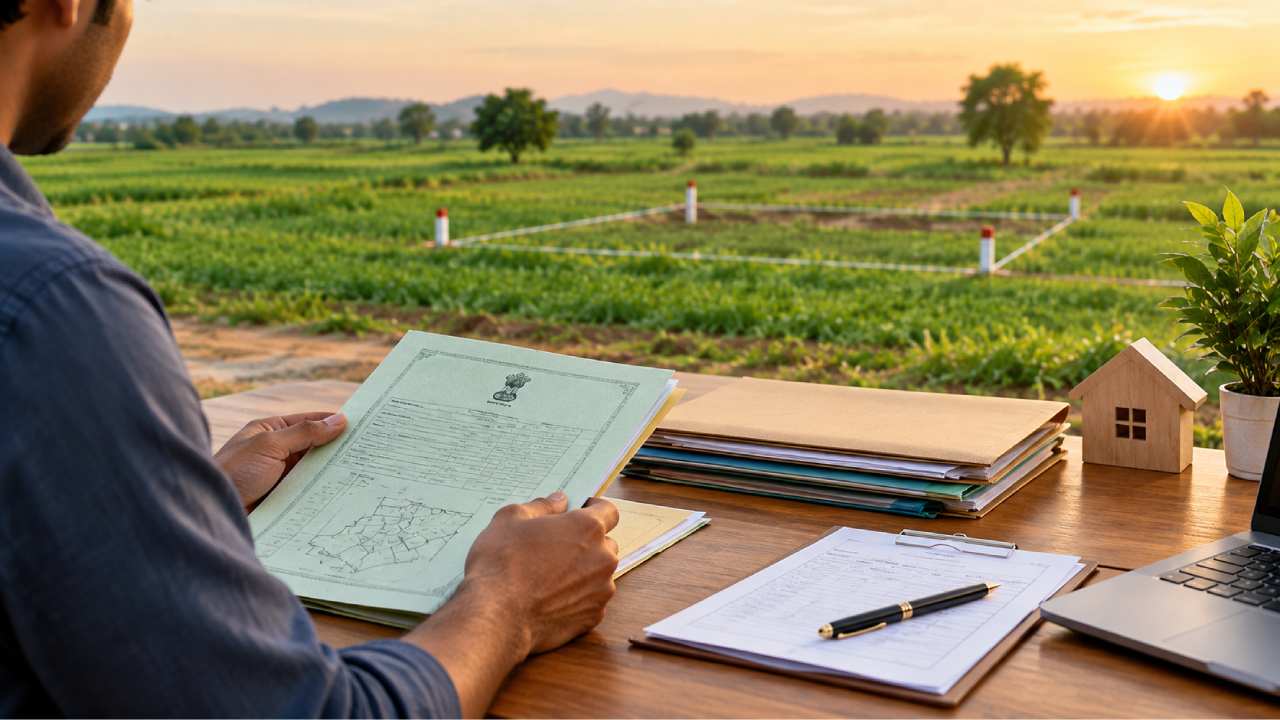
Why Are the Documents to Check Before Buying Agricultural Land So Important?
The land records are cross-referenced. One document may show the name of the owner, another may show the survey number while another may show if the property has any registered transactions or claims.
That is why checking only one document is not enough.
For example, the name of the seller may be written correctly in one record but in another document, the survey number or extent of land may be different. These differences need to be investigated before you move forward.
The records to check before buying agricultural land should always be compared with each other and with the actual property on the ground.
1. Pattadar Passbook and Title Documents
The first thing a purchaser should do is check the title of the land.
The Pattadar Passbook and other title documents can help you to understand who is entered as pattadar/owner and what land is associated with that ownership.
Before buying, check below:
- Owner’s name
- Survey number
- Land extent
- Nature of the land
- Village and location details
- Details mentioned in the available title records
The details should match the information provided by the seller.
Knowing the records to check before buying agricultural land can help you identify ownership-related issues before paying a large amount.
Do not simply look at the owner’s name. Check that the survey number and the extent of land also tally with the same information.
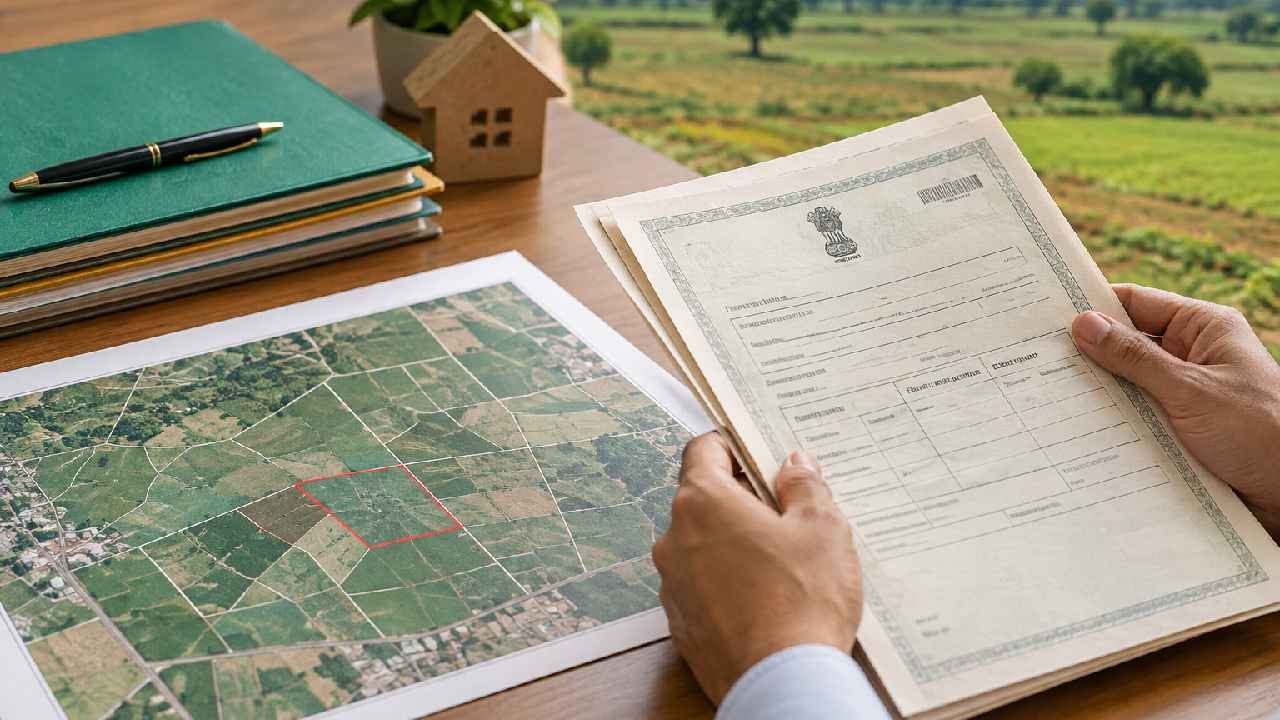
2. Registered Sale Deed & Earlier Title Documents
Sale Deed is one of the most important papers in land transaction.
It shows how the property went from one person to another. But, sometimes looking at the latest Sale Deed may not be enough.
You should also know the prior ownership history of the property.
Depending on the property, you also need to examine below following points:
- Current registered Sale Deed
- Previous Sale Deeds
- Gift Deed, Partition Deed or other relevant documents
- Title chain
- Registration details
- Survey number and land extent
A proper title chain helps you understand how the seller acquired the property.
Before finalizing a property, review the records to check before buying agricultural land carefully instead of depending only on the latest registration document.
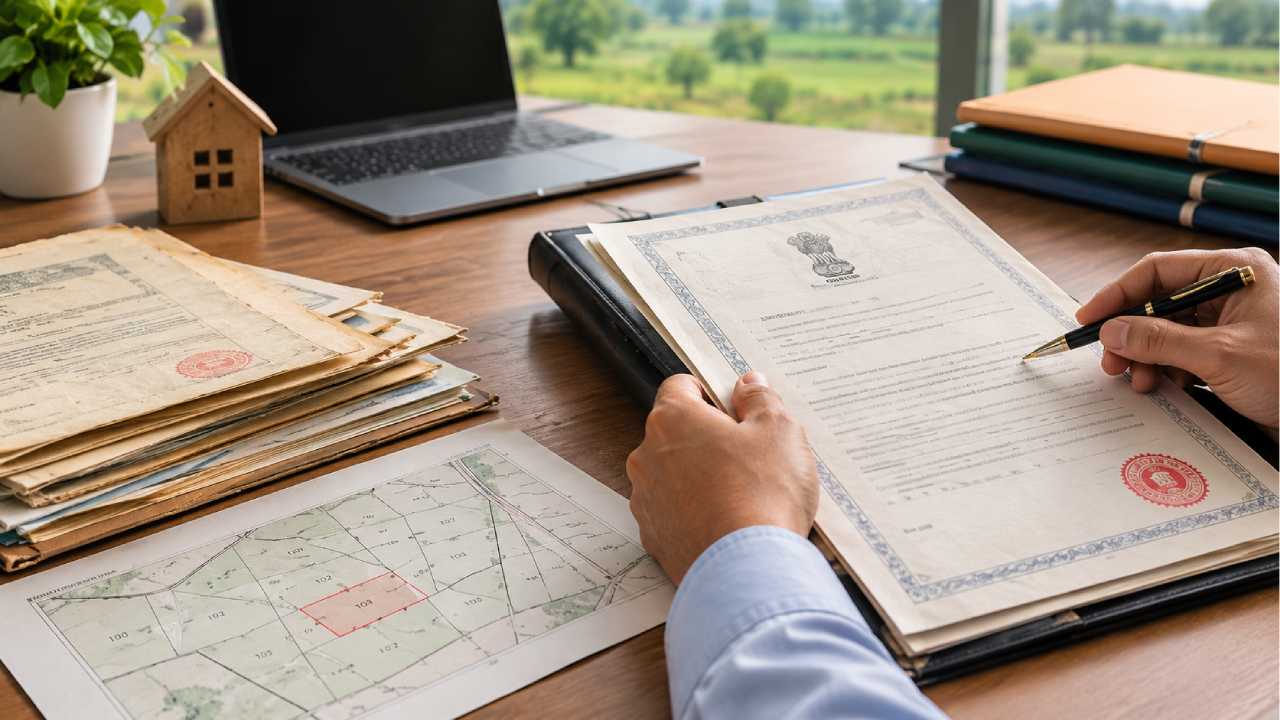
3. Encumbrance Certificate (EC)
Another important document to verify is the Encumbrance Certificate or EC as it is popularly known.
An EC enables you to find out whether there are any registered transactions or encumbrances on the property for the period of the certificate.
Depending on the records and period searched, it may help identify things such as:
- Registered sale transactions
- Mortgages or certain registered charges
- Other registered encumbrances
The period covered by the EC is important. A buyer should not assume that one certificate automatically proves that the property has no possible legal issue.
The records to check before buying agricultural land should be reviewed together because no single document gives the complete picture.
If the seller says the land is completely free from claims, ask for the relevant records and verify them independently.
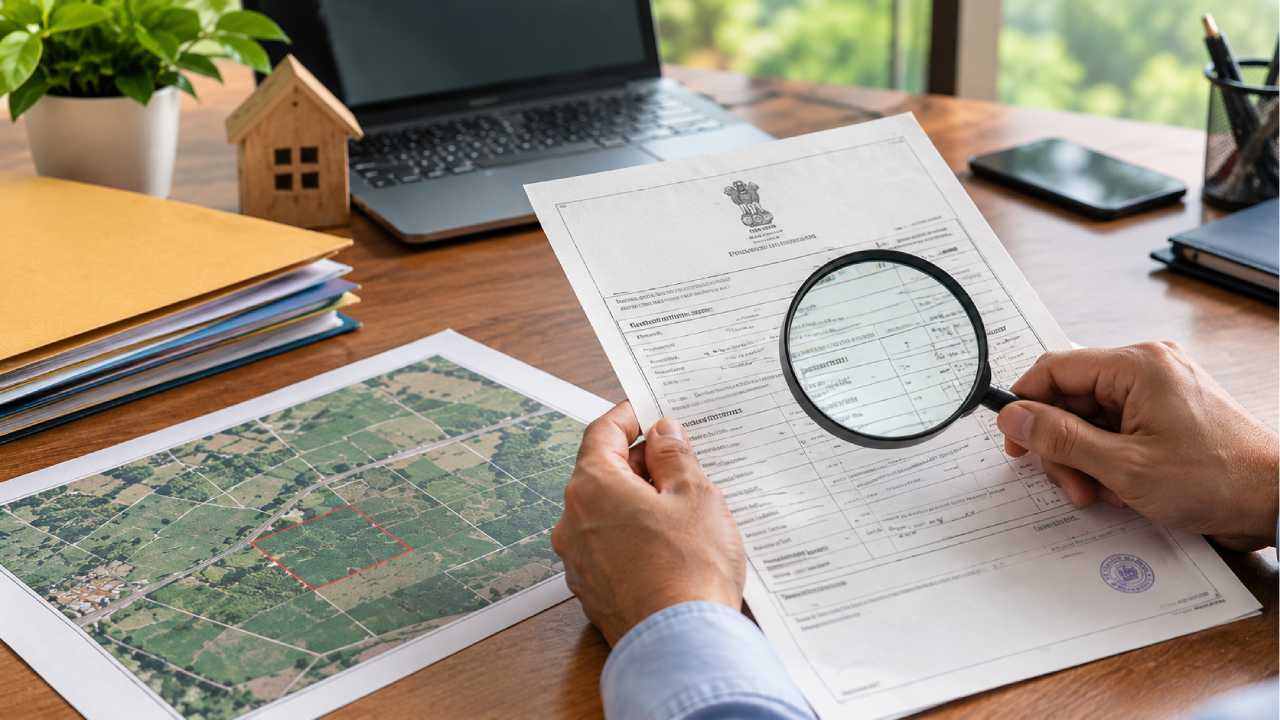
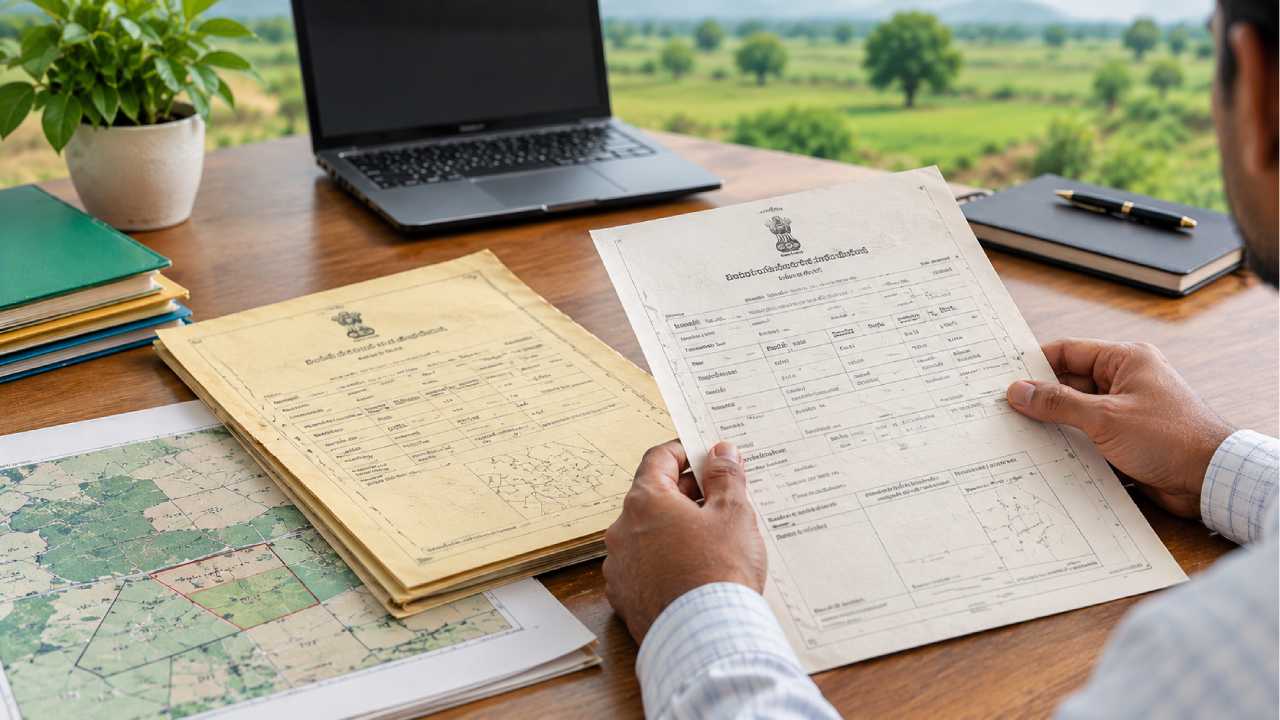
4. Record of Rights (ROR/1B) and Pahani/Adangal
Revenue records are very important while buying the agricultural land.
The land and its recorded ownership or cultivation details can be obtained from records like ROR/1B and Pahani/Adangal, as per the record.
These records may include information such as:
- Pattadar / owner details survey no.
- Area of land
- Land classification or nature
- Information regarding cultivation
- Revenue record information
These details should be compared with Sale Deed, Pattadar Pass Book and other available records.
It is one of the most important records to check before buying agricultural land. The revenue record will help you find out the differences between the seller’s claims and the government records.
If the survey number or extent is different, do not disregard it.
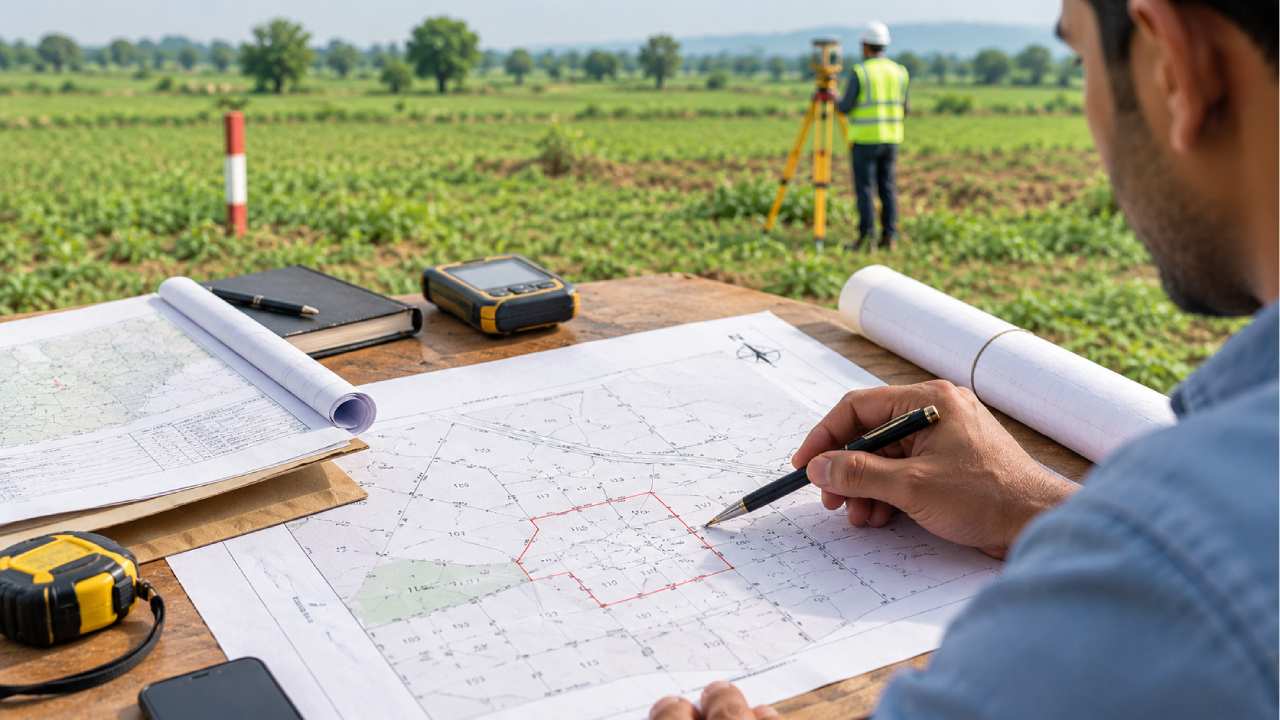
5. Survey Number, FMB/Tippan and Land Boundaries
Paper records are one thing, but the land on the ground has to match those records.
Survey related records such as FMB/Tippan or applicable survey maps can be helpful in understanding the boundaries and measurements of the property very well.
Before purchasing, verify:
- Survey number
- Sub-division number, if applicable
- Total extent
- Four-side boundaries
- Physical location
- Access road
- Actual position of the land
This is particularly important when buying agricultural land because large properties can have multiple survey numbers, subdivisions or neighbouring parcels.
The records to check before buying agricultural land should not be checked only at home. The information should also be compared with the physical property.
If possible, conduct a proper site survey with a qualified surveyor when there is any doubt about boundaries or measurements.
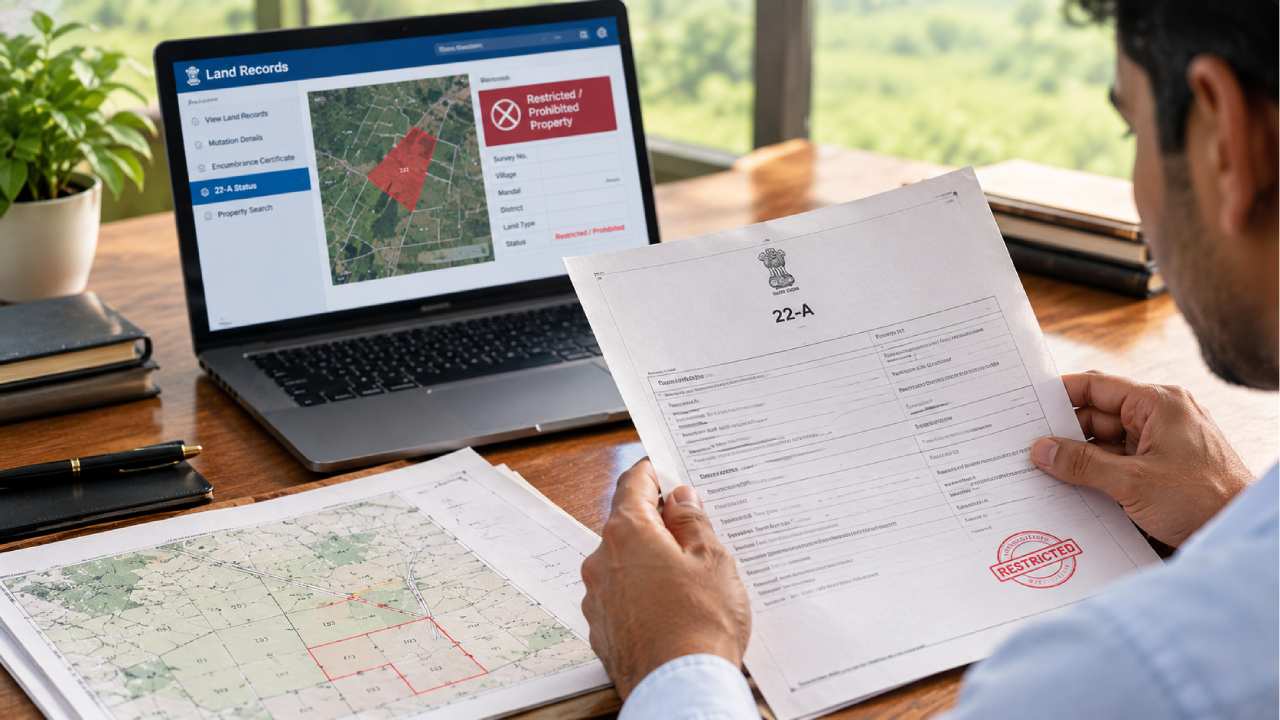
6. 22-A Status/Prohibited Property
Before you buy a piece of land, you should also verify that the property is not in any prohibited category or restriction laid down by the concerned government records.
Where applicable the 22-A/prohibited property records are important as some properties may be non-registrable or non-transferrable under the applicable legal framework.
The buyer is advised to verify with the concerned official records or registration authorities.
Do not assume that a property is safe to purchase simply because the seller has previous documents.
The records to check before buying agricultural land should include checking whether there are any government restrictions affecting the property.
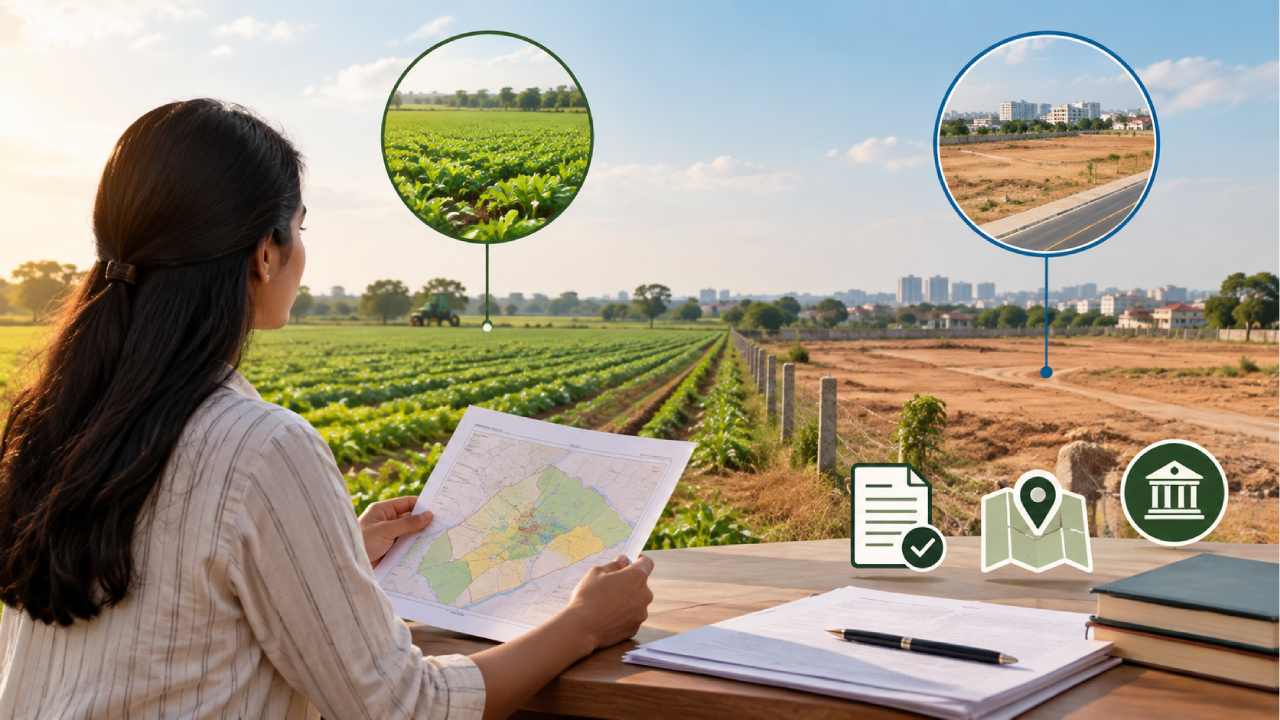
7. Land Use and NALA Condition
Another important point is to understand the present status of land-use of the property.
Certain legal and usage requirements may differ between agricultural land and converted / non-agricultural land. Where applicable, buyers should verify whether the land has already been converted and if the necessary permissions or records are available.
Check the applicable permissions, land-use status and government records.
Understanding the records to check before buying agricultural land also means understanding what you are legally permitted to do with that land.
Why Checking One Document Is Never Enough
A common mistake buyers make is checking one document and assuming everything is clear.
For example:
The Sale Deed may show one owner.
The revenue record may show another name.
The survey number may be different.
The physical boundary may not match the document.
Or there may be a restriction that the buyer was not aware of.
This is why the records to check before buying agricultural land should be cross-verified rather than checked individually.
A simple way to remember the process is:
Ownership → Title → EC → Revenue Records → Survey → Restrictions → Land Use
If these details do not match, stop and investigate before making the payment.
What If the Seller Says “Everything Is Clear”?
This is one of the most common situations buyers face.
A seller may genuinely believe the property is clear, but that does not replace independent verification.
You should still check the documents, compare the details and, where necessary, take professional legal advice.
Every buyer should take time to understand the records to check before buying agricultural land before paying a large amount.
Remember, buying land is not like buying an ordinary product. Once a large amount of money is invested, correcting a title or boundary problem can become difficult and expensive.
Physical Verification Is Also one Important thing to verify
Documents are only one part of due diligence. Buyers should also check applicable planning and land-use information from the relevant planning authority before relying on development-related claims.
Visit the property and check:
- Actual road access
- Physical boundaries
- Nearby properties
- Electricity availability
- Water availability
- Existing structures
- Cultivation
- Any disputes or objections known locally
- Whether the land shown to you is actually the same survey property in the records
The records to check before buying agricultural land should match what you see on the ground.
If the document says a particular extent but the physical land appears smaller, investigate before proceeding.
A Simple Checklist Before You Buy
Before making a final decision, keep this basic checklist with you:
☑ Ownership and Pattadar details
☑ Registered Sale Deed
☑ Previous title documents
☑ Encumbrance Certificate
☑ ROR/1B and Pahani/Adangal
☑ Survey/FMB/Tippan and boundaries
☑ Prohibited property/22-A status
☑ Land-use and NALA status, where applicable
☑ Physical site verification
☑ Professional legal verification where required
Proper verification of the records to check before buying agricultural land can help you make a more informed decision.
Closing Thoughts
Buying agricultural land should never be based only on the location, price or promises made by the seller.
The real question is: Does the land have a clear and properly verifiable record?
The records to check before buying agricultural land can help you understand ownership, title history, registered transactions, revenue records, boundaries, restrictions and land-use status.
Take your time. Compare the documents with each other, verify the property on the ground and get professional legal help when required.
A few hours of proper verification before buying can help you avoid much bigger problems later.