Farmhouse Construction Telangana: Rules, Permissions & Key Check
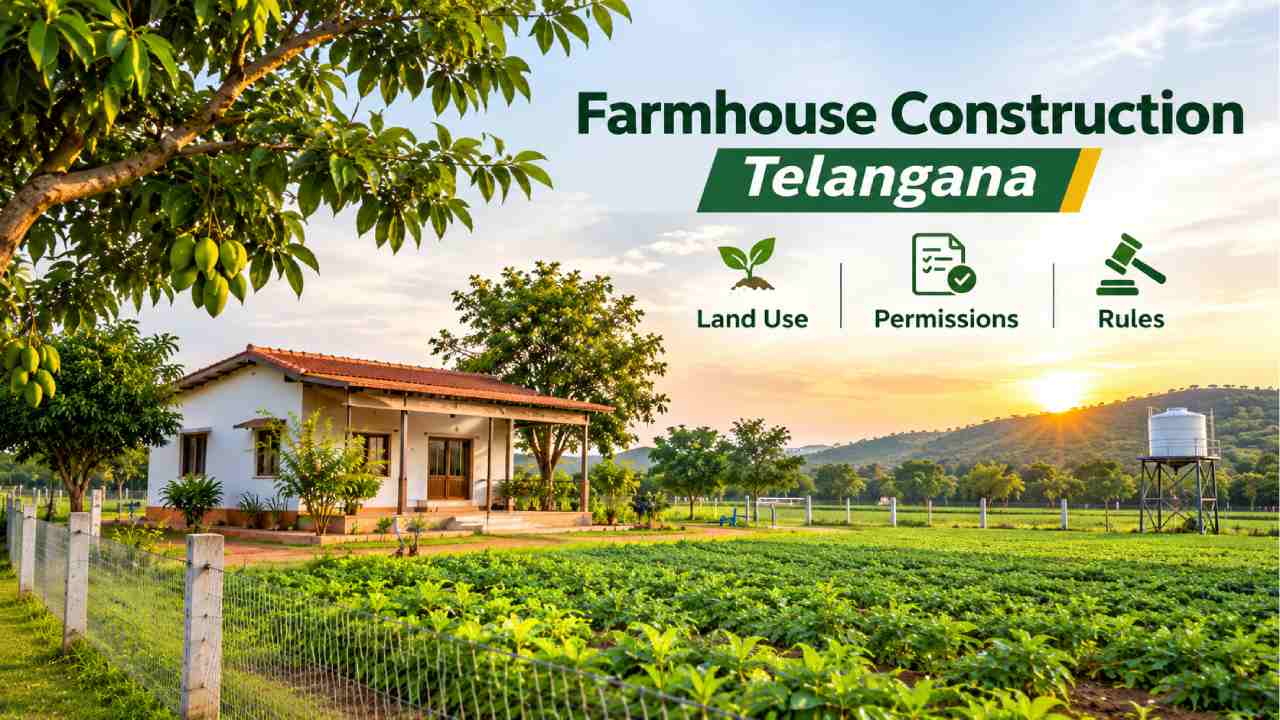
Farmhouse Construction Telangana: Owning agricultural land is a dream for many people. Some want to grow crops, while others want to maintain an orchard, store farm equipment or build a small structure to support agricultural activities.
Many landowners also think about building a farmhouse where they can spend time with their families.
But one important question comes before construction: Can you legally build a farmhouse on agricultural land in Telangana?
The answer depends on the purpose of the building, the land’s classification, local zoning regulations and the permissions required from the competent authorities.
Farmhouse construction Telangana is not covered by one simple rule that allows every agricultural landowner to build a residential structure. A farm-related building and a residential farmhouse may be treated differently under applicable laws.
In this guide, we explain the important rules, permissions and checks that landowners should understand before starting construction.
1. What Does Farmhouse Construction Telangana Mean?
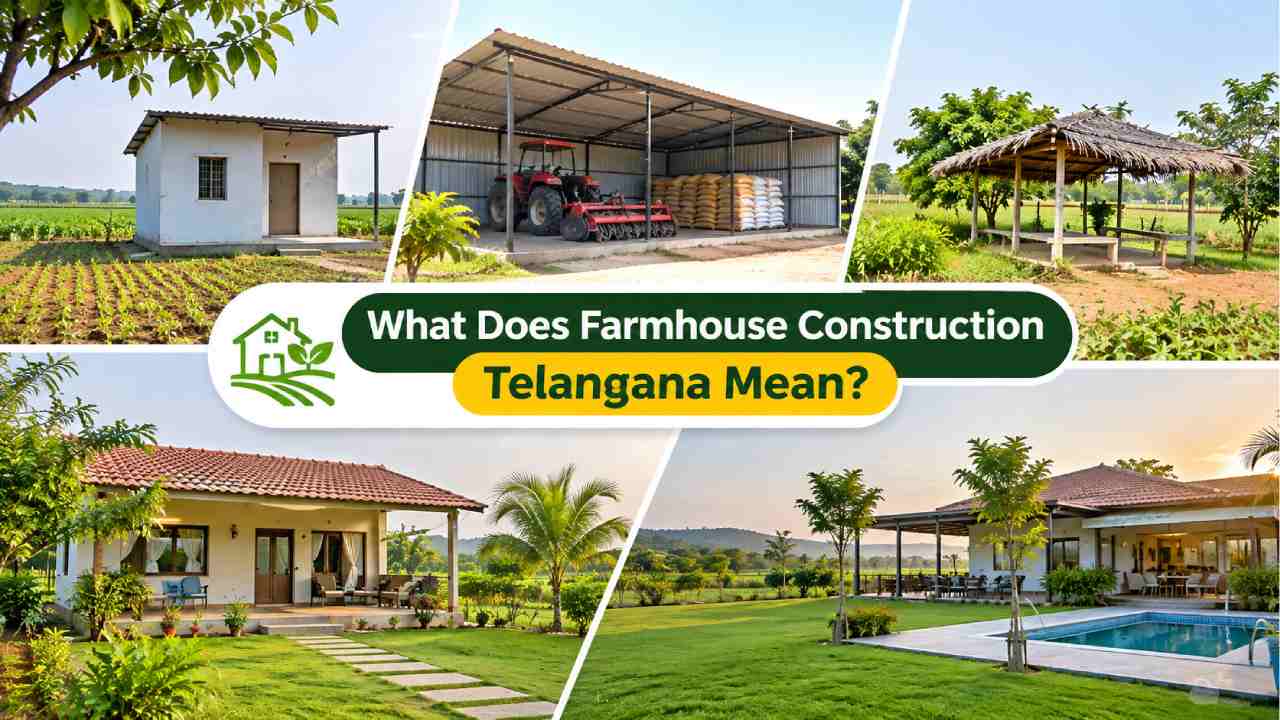
A farmhouse is commonly understood as a building located on or near agricultural land. However, the term can describe different types of structures.
For example:
- A small room used by farmers during agricultural work.
- A storage space for farming tools and equipment.
- A shelter for workers involved in agricultural activities.
- A residential building used as a weekend home.
- A larger farmhouse with bedrooms, a kitchen and recreational facilities.
These structures may have different legal requirements.
The main point is that the name given to a building does not decide whether it is legally permitted. The actual use of the structure and the applicable land-use regulations matter.
A building genuinely required for agricultural activities may be treated differently from a residential property constructed for personal or recreational use.
2. What Does Telangana Law Say About Farmhouse Construction Telangana?
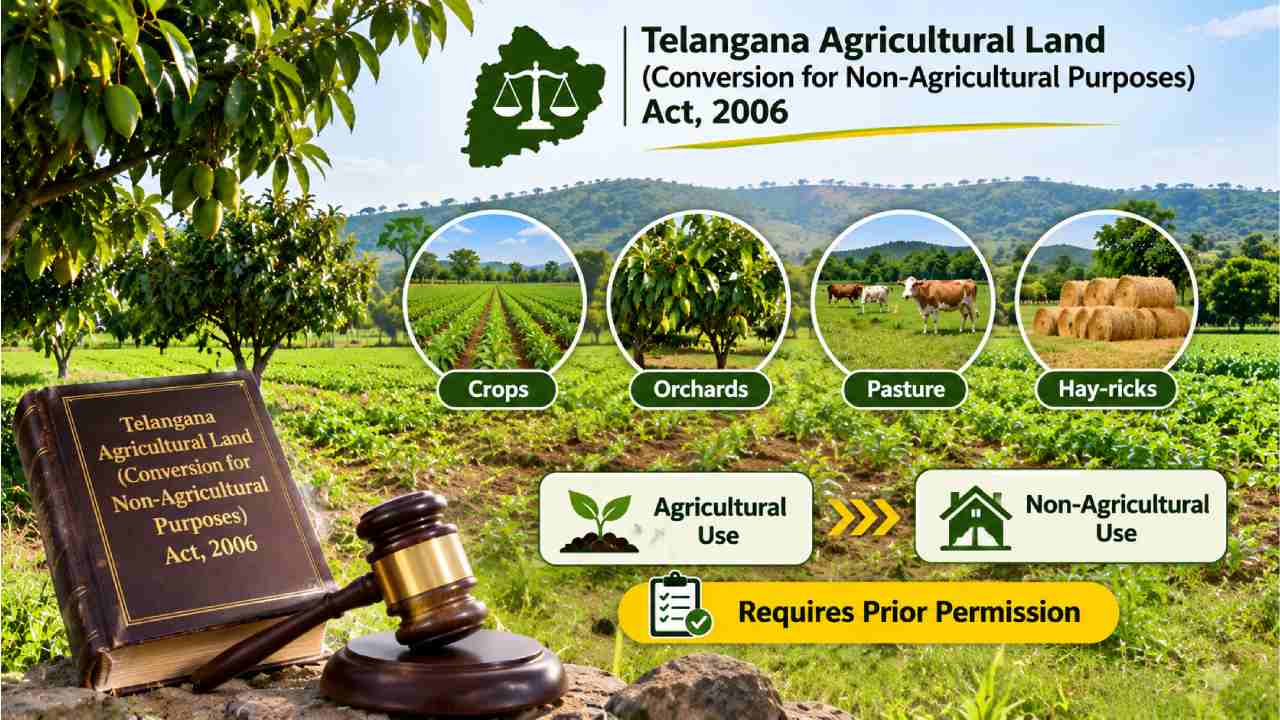
One important law to understand is the Telangana Agricultural Land (Conversion for Non-Agricultural Purposes) Act, 2006.
Under Section 3 of this Act, agricultural land cannot be put to a non-agricultural purpose without prior permission from the competent authority.
The Act defines agriculture to include:
- Growing crops or garden produce.
- Raising orchards.
- Raising pasture.
- Maintaining hay-ricks.
This means that the purpose for which the land is being used is important when determining whether a proposed activity amounts to a change from agricultural to non-agricultural use.
If a landowner plans to use agricultural land for a residential or other non-agricultural purpose, the applicable conversion requirements must be examined.
Important: Do not assume that every small building is automatically exempt from land-use requirements. The exact nature and use of the proposed structure must be assessed.
Official reference: Telangana Agricultural Land (Conversion for Non-Agricultural Purposes) Act, 2006.
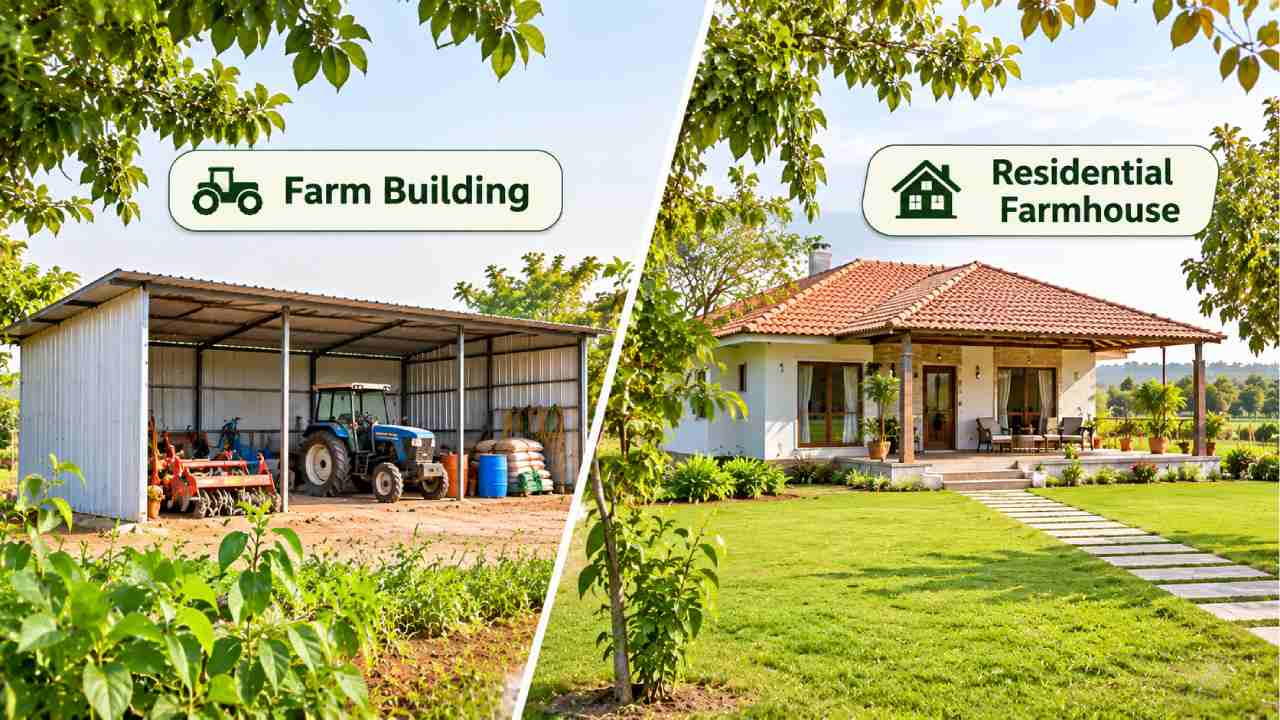
3. Farm Building vs Residential Farmhouse: What Is the Difference?
This is one of the most important distinctions in farmhouse construction Telangana.
| Farm-related building | Residential farmhouse |
|---|---|
| Supports agricultural activities | Mainly used for residential purposes |
| May include equipment storage | May include bedrooms and living areas |
| Can support farm operations | May be used as a weekend home |
| Must comply with applicable rules | Must comply with applicable land-use and building rules |
For example, a structure used to store agricultural equipment may have a different purpose from a building designed as a family holiday home.
Even if both structures are located on agricultural land, their legal treatment may not be the same.
Before preparing a building plan, clearly identify the intended purpose of the structure and confirm the applicable requirements with the competent authority.
4. Is Building Permission Required for Farmhouse Construction Telangana?
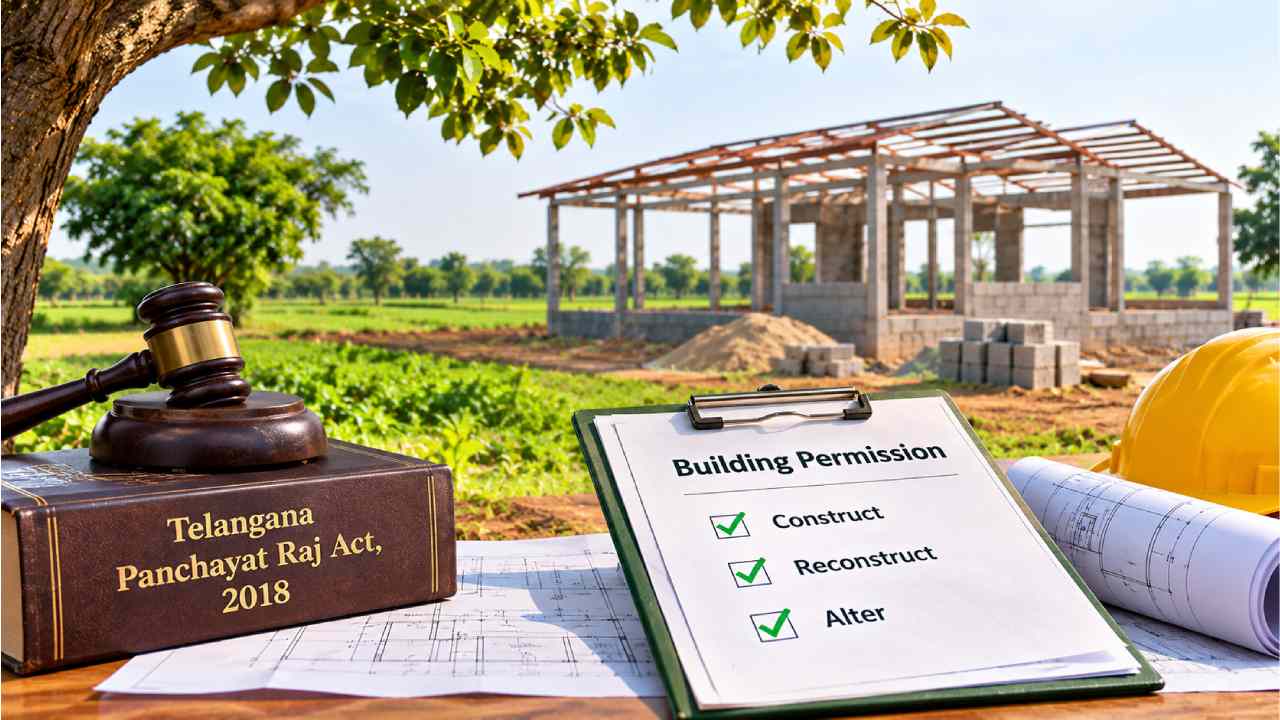
Yes, building permission requirements must be checked before construction.
The Telangana Panchayat Raj Act, 2018 contains provisions relating to building permissions in Gram Panchayat areas.
Section 114 deals with the approval required for constructing, reconstructing or altering buildings.
It also provides a specific distinction for farm buildings.
Under Section 114(7), farm buildings are exempt from the approved-layout requirement mentioned in that provision. However, this does not mean that every farmhouse can be constructed without permission.
The same provision clearly states that building permission is necessary as per the applicable building rules.
This is an important point for landowners. An exemption from the approved-layout requirement is not the same as an exemption from building permission.
The local authority and applicable rules should be consulted before starting any work.
5. Farmhouse Construction Telangana: Does Land Conversion Apply?
Land conversion is another important issue.
The Telangana Agricultural Land (Conversion for Non-Agricultural Purposes) Act, 2006 regulates the change of agricultural land to non-agricultural use.
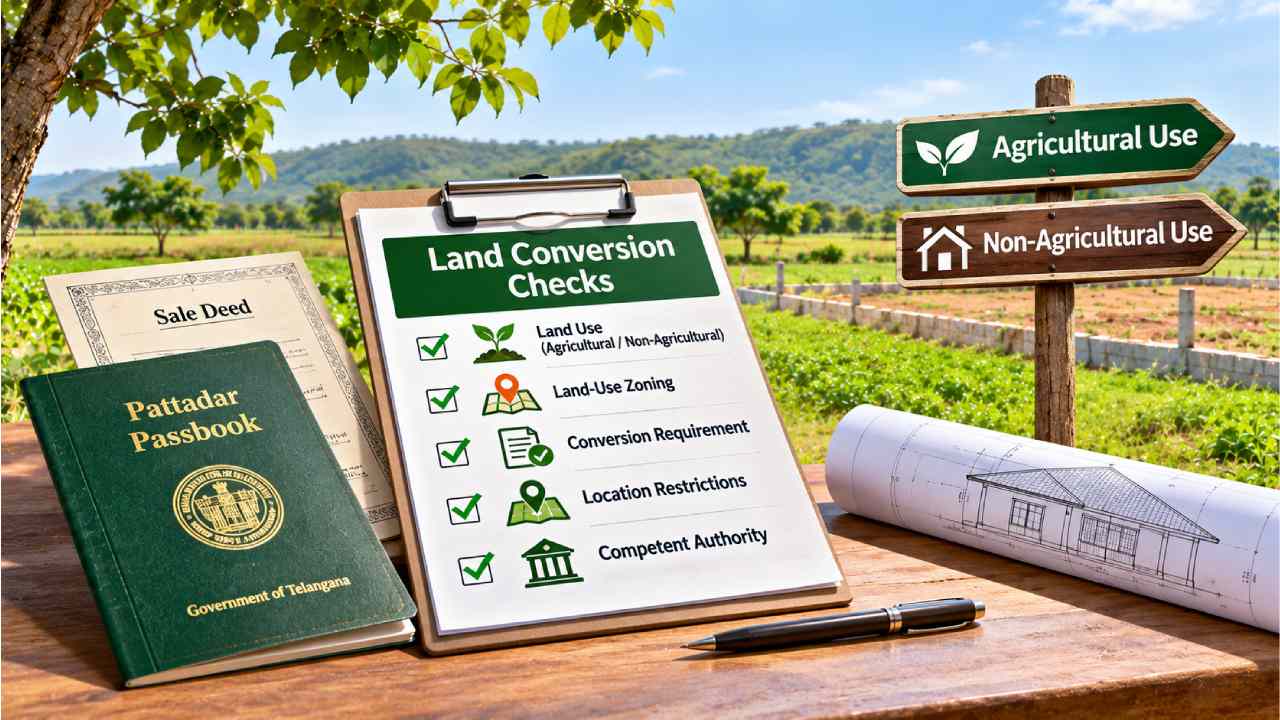
Before planning a residential farmhouse, landowners should check:
- Whether the proposed use is agricultural or non-agricultural.
- Whether land conversion is required.
- Whether the land-use zoning permits the proposed activity.
- Whether any special restrictions apply to the location.
- Which authority is responsible for granting the required permission.
A landowner should not assume that having a registered sale deed or Pattadar Passbook automatically gives permission to construct a residential building.
Ownership and development permission are two different matters.
For this reason, farmhouse construction Telangana should always be planned after checking the land-use status and applicable conversion requirements.
6. Does the Location of Agricultural Land Matter?
Yes. The location of the land can make a significant difference.
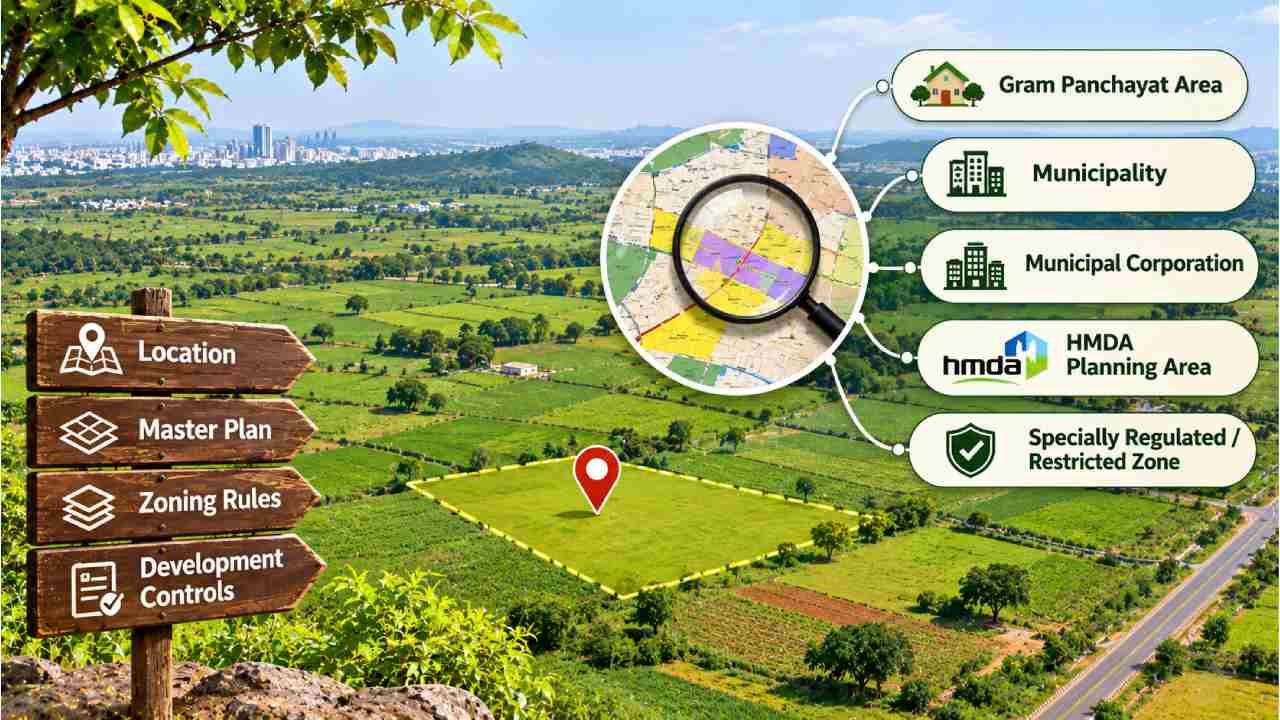
The applicable planning and building authority may depend on whether the property falls within:
- A Gram Panchayat area.
- A municipality.
- A municipal corporation.
- An HMDA planning area.
- A specially regulated or restricted zone.
Landowners should check the applicable master plan, zoning regulations and local development controls.
For example, land near Hyderabad may fall under different planning jurisdictions depending on its exact village, survey number and location.
A property being outside the city does not automatically mean that there are no development restrictions.
7. Farmhouse Construction Telangana: What About Restricted Zones?
Certain areas may have additional restrictions because of environmental protection, water bodies, planning regulations or other government notifications.
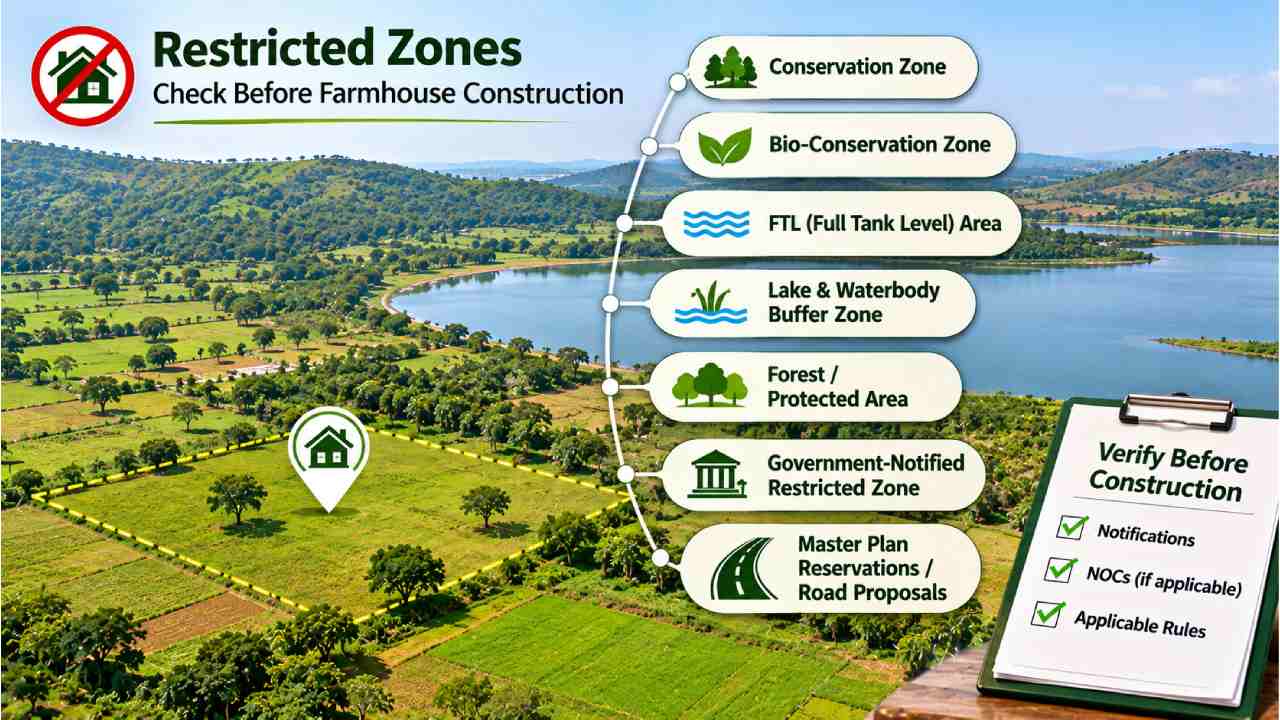
Before starting farmhouse construction Telangana, check whether the land falls within or near:
- Conservation zones.
- Bio-conservation zones.
- Full Tank Level (FTL) areas.
- Lake and waterbody buffer zones.
- Forest or protected areas.
- Government-notified restricted zones.
- Areas affected by master-plan reservations or road proposals.
For example, the TG-bPASS FAQ explains that building applications for plots falling within notified waterbody beds or FTL areas cannot be considered for permission. It also mentions that certain properties abutting waterbodies require relevant departmental NOCs.
The exact restrictions depend on the applicable notification and the property’s location.
Do not rely only on verbal statements such as “farmhouses are allowed in this area.” Ask for the relevant official permission or written clarification.
8. What Documents Should You Check Before Construction?
Before proceeding with farmhouse construction Telangana, keep the relevant land and planning documents ready.
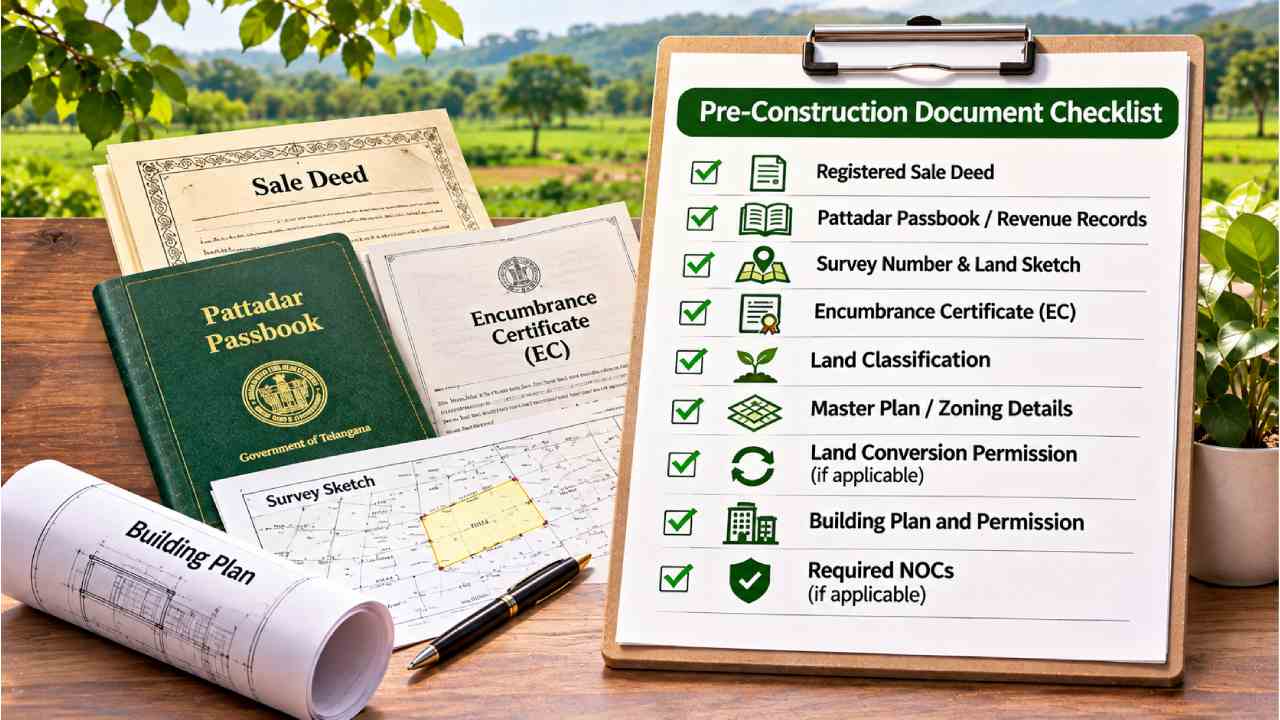
Here is a practical checklist:
| Document or detail | Why it matters |
|---|---|
| Registered Sale Deed | Helps establish the ownership history |
| Pattadar Passbook / Revenue Records | Helps check recorded land details |
| Survey Number and Land Sketch | Helps identify the exact parcel |
| Encumbrance Certificate | Helps check registered transactions and encumbrances |
| Land Classification | Helps understand the recorded nature of the land |
| Master Plan / Zoning Details | Helps identify permitted and restricted uses |
| Land Conversion Permission, if applicable | Relevant when the proposed use requires conversion |
| Building Plan and Permission | Confirms approval for the proposed construction |
| Required NOCs | May be needed depending on the location and project |
Not every document will apply to every property. The competent authority can confirm the exact documents required for the proposed work.
To understand the important documents and verification process in more detail, read our guide on 7 Records to Check Before Buying Agricultural Land in Telangana.
9. How to Check Permission Before Starting Farmhouse Construction Telangana
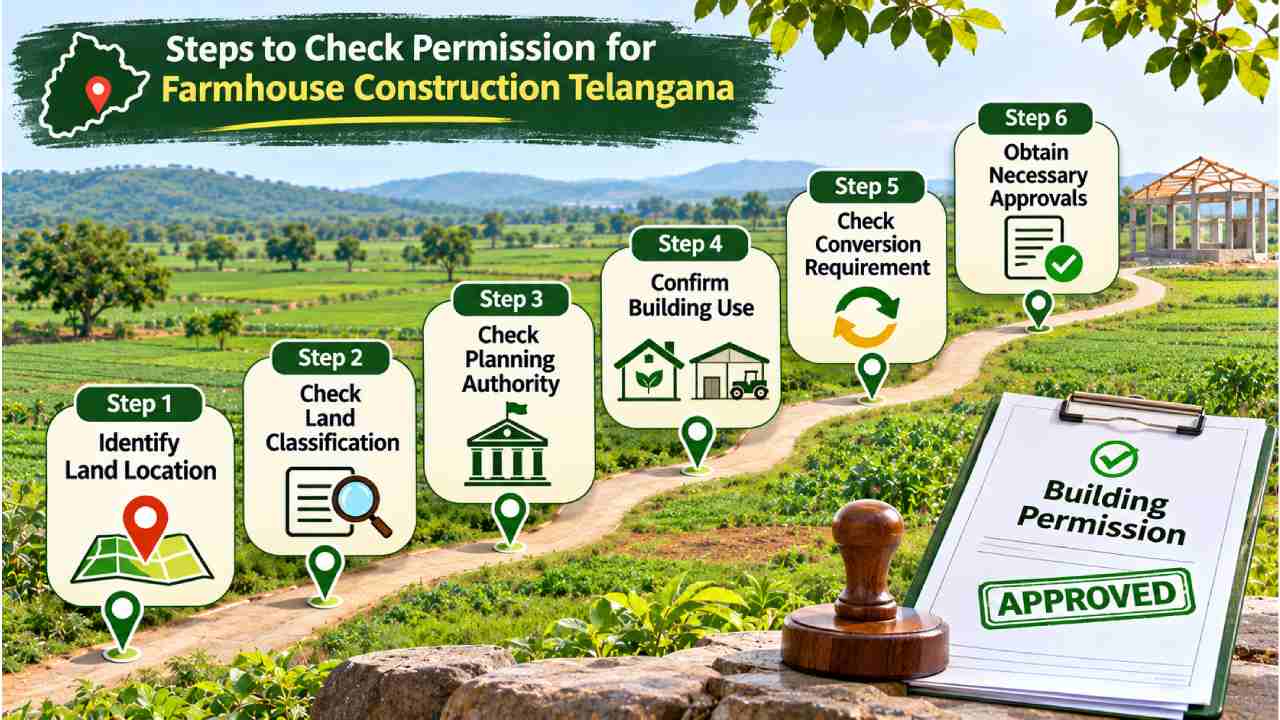
A practical approach is to follow these steps.
Step 1: Identify the exact land location
Keep the village, mandal, district, survey number and subdivision details ready.
Step 2: Check the land classification
Verify whether the property is recorded as agricultural land and check for any applicable restrictions.
Step 3: Check the planning authority
Find out whether the land falls under a Gram Panchayat, municipality, HMDA or another planning authority.
Step 4: Confirm the proposed building use
Explain whether you intend to construct a farm-related structure or a residential farmhouse.
Step 5: Check conversion requirements
Ask the competent revenue authority whether land-use conversion is required for the proposed activity.
Step 6: Obtain the necessary approvals
Submit the required plans and documents to the competent authority and obtain the applicable written permissions before construction.
This process can help avoid misunderstandings and costly mistakes later.
Before proceeding, buyers should also understand the agricultural land verification process in Telangana.
10. Farmhouse Construction Telangana: Common Mistakes to Avoid
Many landowners make decisions based on what they see on neighbouring properties or hear from local sellers.
However, another person’s construction does not prove that the same construction is legally permitted on your land.
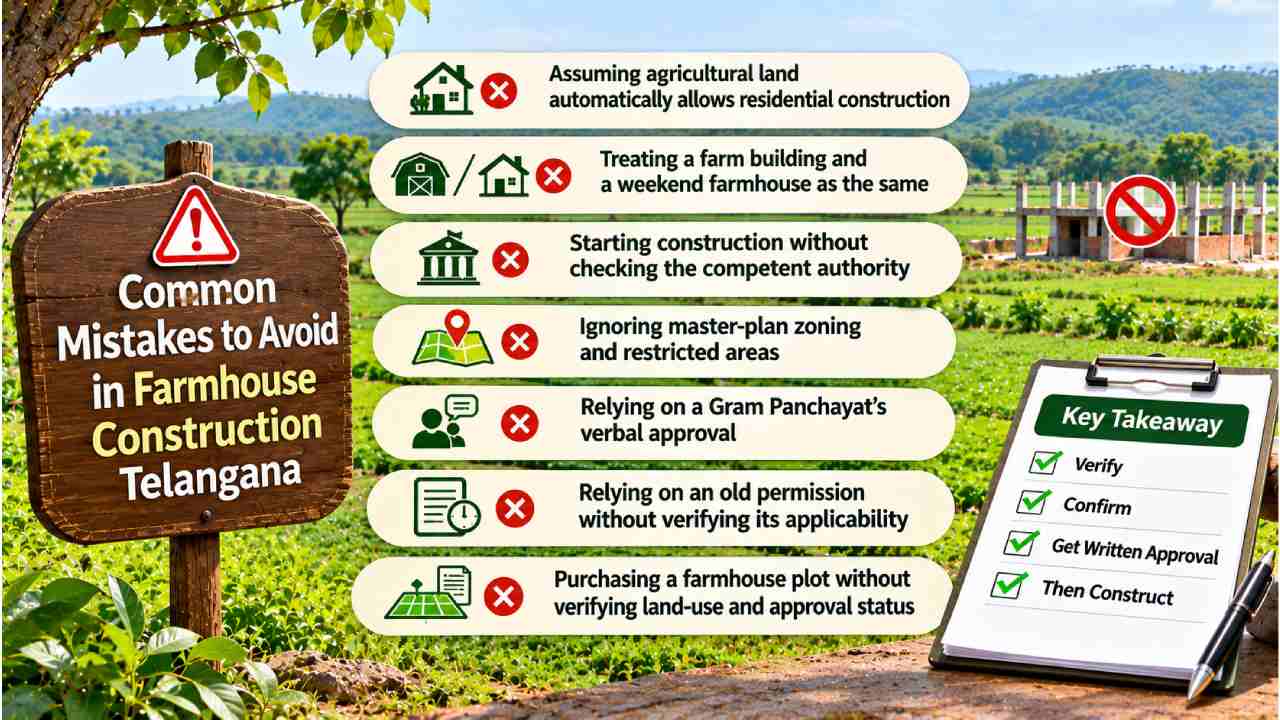
Avoid these common mistakes:
- Assuming that agricultural land automatically allows residential construction.
- Treating a farm building and a weekend farmhouse as the same thing.
- Starting construction without checking the competent authority.
- Ignoring master-plan zoning and restricted areas.
- Assuming that a Gram Panchayat’s verbal approval is sufficient.
- Relying on an old permission without checking whether it applies to the proposed work.
- Purchasing a farmhouse plot without verifying the underlying land-use and approval status.
A little verification before construction can prevent serious legal and financial problems.
11. What Should Buyers Ask Before Purchasing Agricultural Land for a Farmhouse?
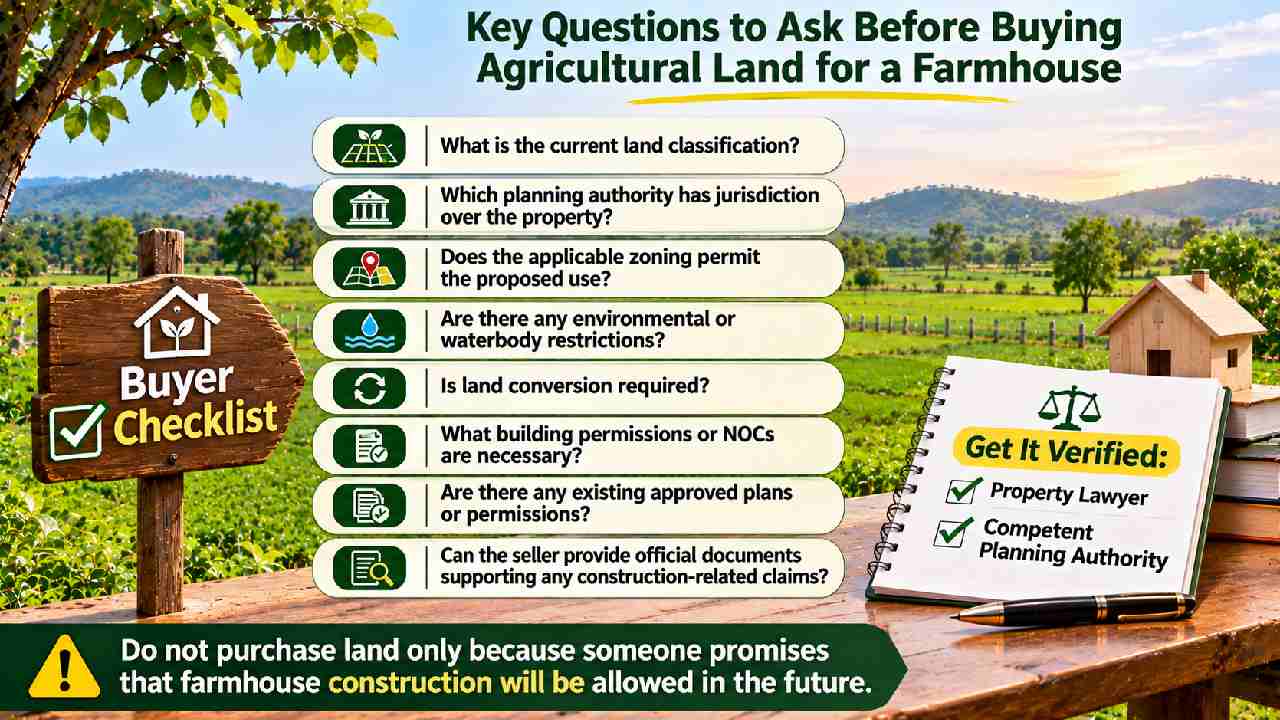
If your main intention is to purchase agricultural land and build a farmhouse later, ask these questions before making a payment:
- What is the current land classification?
- Which planning authority has jurisdiction over the property?
- Does the applicable zoning permit the proposed use?
- Are there any environmental or waterbody restrictions?
- Is land conversion required?
- What building permissions or NOCs are necessary?
- Are there any existing approved plans or permissions?
- Can the seller provide official documents supporting any construction-related claims?
Most importantly, get the property-specific position checked by a qualified local property lawyer and the competent planning authority.
Do not purchase land only because someone promises that farmhouse construction will be allowed in the future.
Conclusion
Agricultural land can serve many purposes, from cultivation and orchards to supporting farm-related activities. However, constructing a residential farmhouse involves additional legal and planning considerations.
Farmhouse construction Telangana should never be based only on assumptions, neighbouring buildings or verbal promises.
The safest approach is to verify the land classification, zoning, conversion requirements and building permissions for the exact survey number before starting construction.
For landowners, the goal should not simply be to build a structure. It should be to make sure that the proposed use and construction comply with the rules applicable to the property.
A properly verified property and the right approvals can help you plan with greater confidence.
Official Government References
For accurate information about farmhouse construction and land-use regulations in Telangana, refer to these official government resources:
- Telangana Agricultural Land (Conversion for Non-Agricultural Purposes) Act, 2006 – Read the Official Act
- Telangana Panchayat Raj Act, 2018 – Read the Official Act
- TG-bPASS – Building Permission Guidelines and FAQs – Visit Official TG-bPASS Portal
- Telangana Government Building Rules and Orders – Check Official Government Orders
Disclaimer: This article is for general educational purposes and is not legal advice. Rules and permissions can vary according to the property’s location, classification, proposed use and applicable government notifications. Always obtain property-specific confirmation from the competent authorities and a qualified legal professional before construction.